The art of hand-worked silver: six techniques and three ornaments
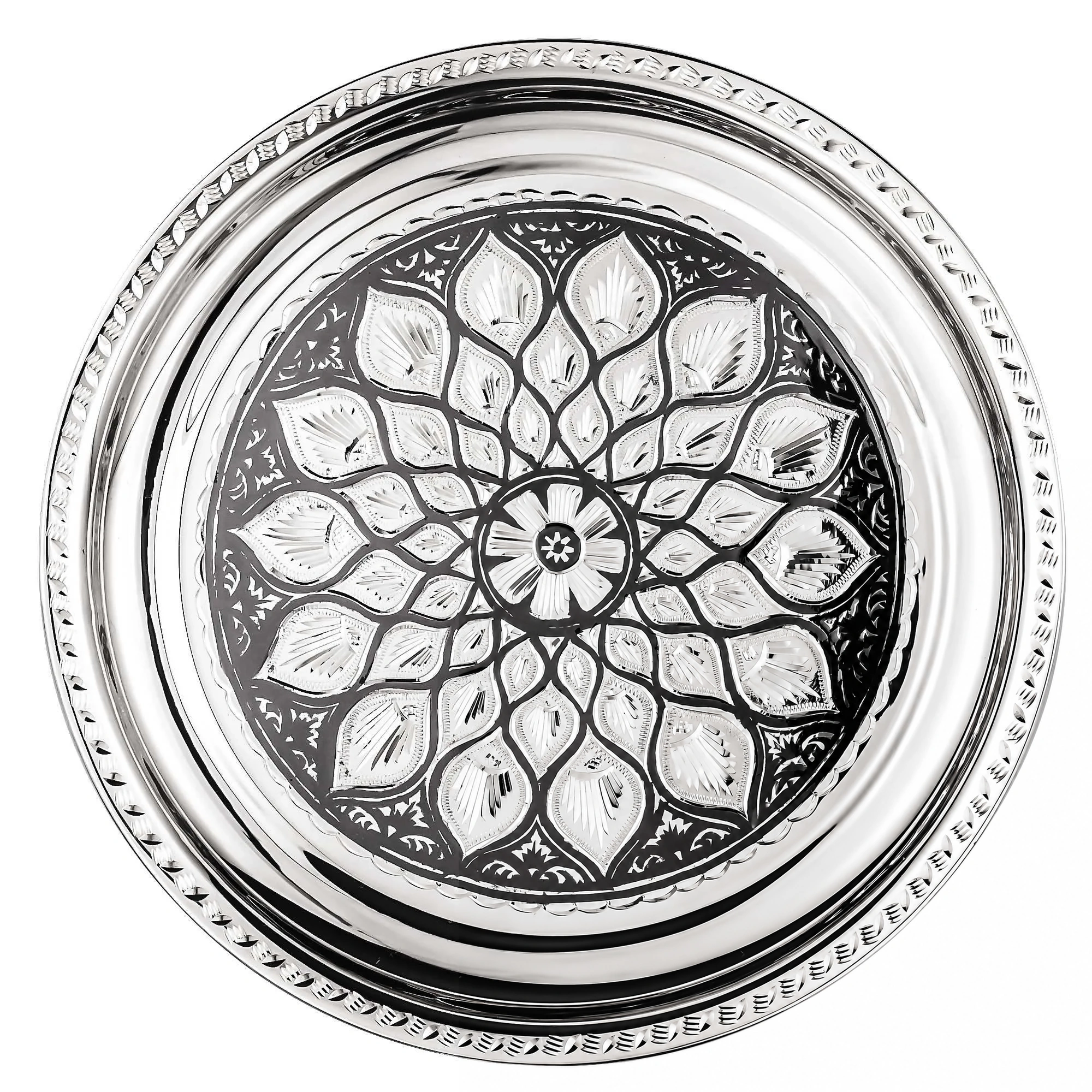
A silver tray can be bought in any department store. What we show at ATHAR is something else: applied art, objects made for daily use that are also, line by line, the work of one person's hand. To see the difference you need to know what the master actually does at the bench. This is a short guide to the techniques behind our pieces, to the ornament they carry, and to looking at silver the way a curator would.
Hand engraving: drawing by removing metal
Everything begins with the burin, a short steel tool with a sharpened point. The engraver sets it against the silver and pushes, lifting a hair-thin ribbon of metal. There is no eraser. A line cut too deep or in the wrong direction stays forever, so the hand must know the whole composition before the first stroke. Depth matters as much as direction: a deeper cut throws a darker shadow, a shallow one catches the light. On the trays below, the pattern seems to turn as you walk around it, and that movement comes entirely from the angle of thousands of individual cuts.
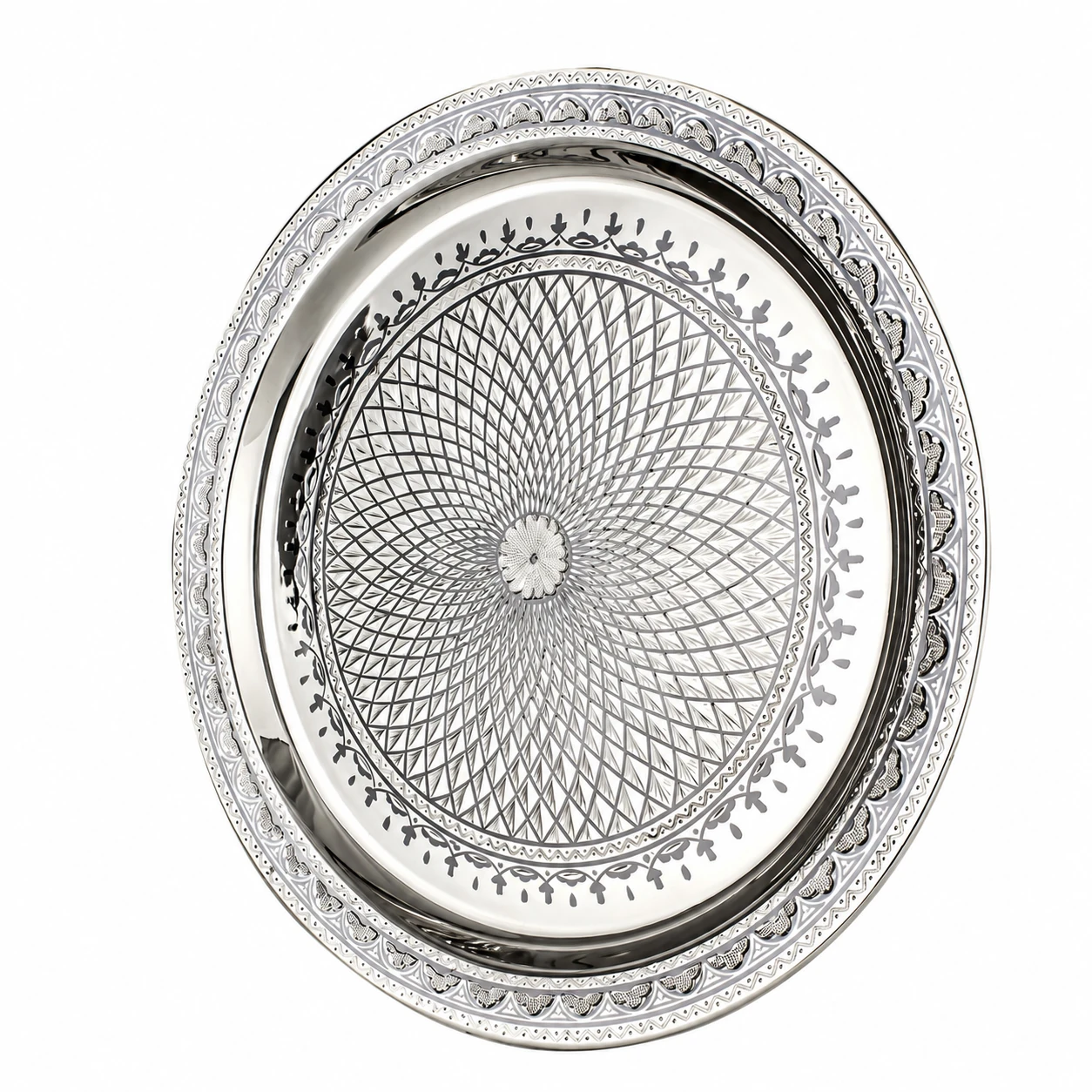 Engraved silver tray
 Silver goblet · 500 ml
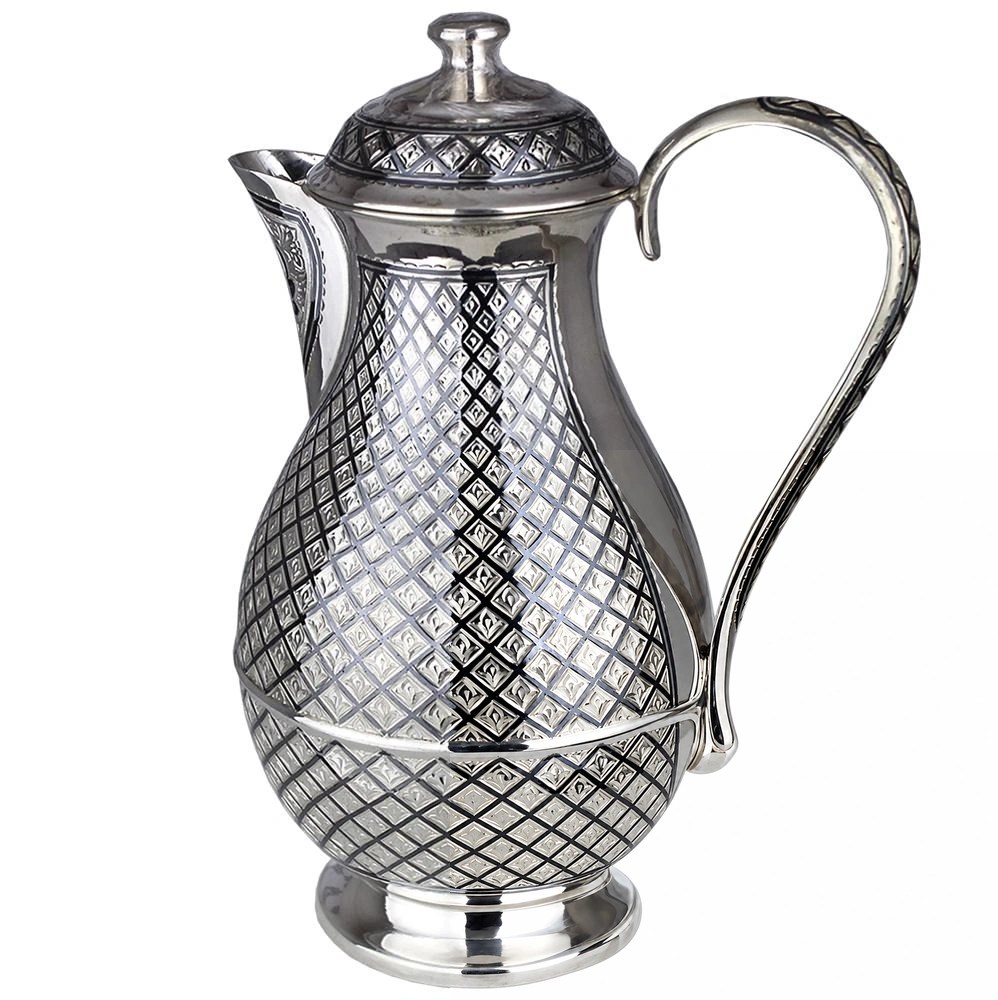 Silver pitcher · 0.73 L
Niello: the black drawing
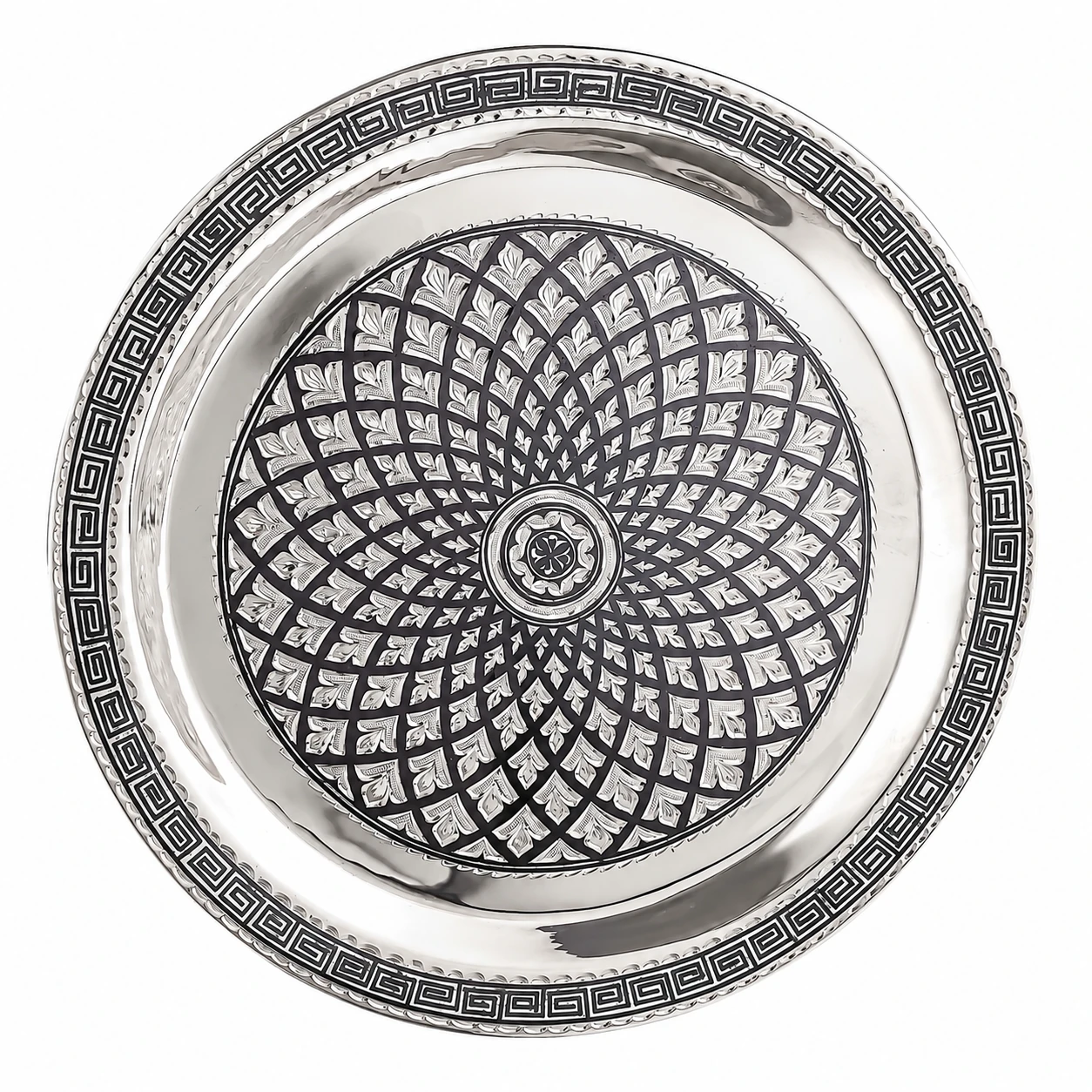
Niello is a black alloy of silver, copper, lead and sulphur. It is ground to powder, laid into the engraved lines and fused in the kiln, then the whole surface is filed and polished back until only the ornament stays dark. The result reads like ink on white paper, but it is metal and will not wear away. Roman, Byzantine and Islamic goldsmiths used it for centuries; we have written about it in more detail in our article on niello. Good niello is level with the silver, without pits or bubbles, and its edge follows the engraved line exactly.
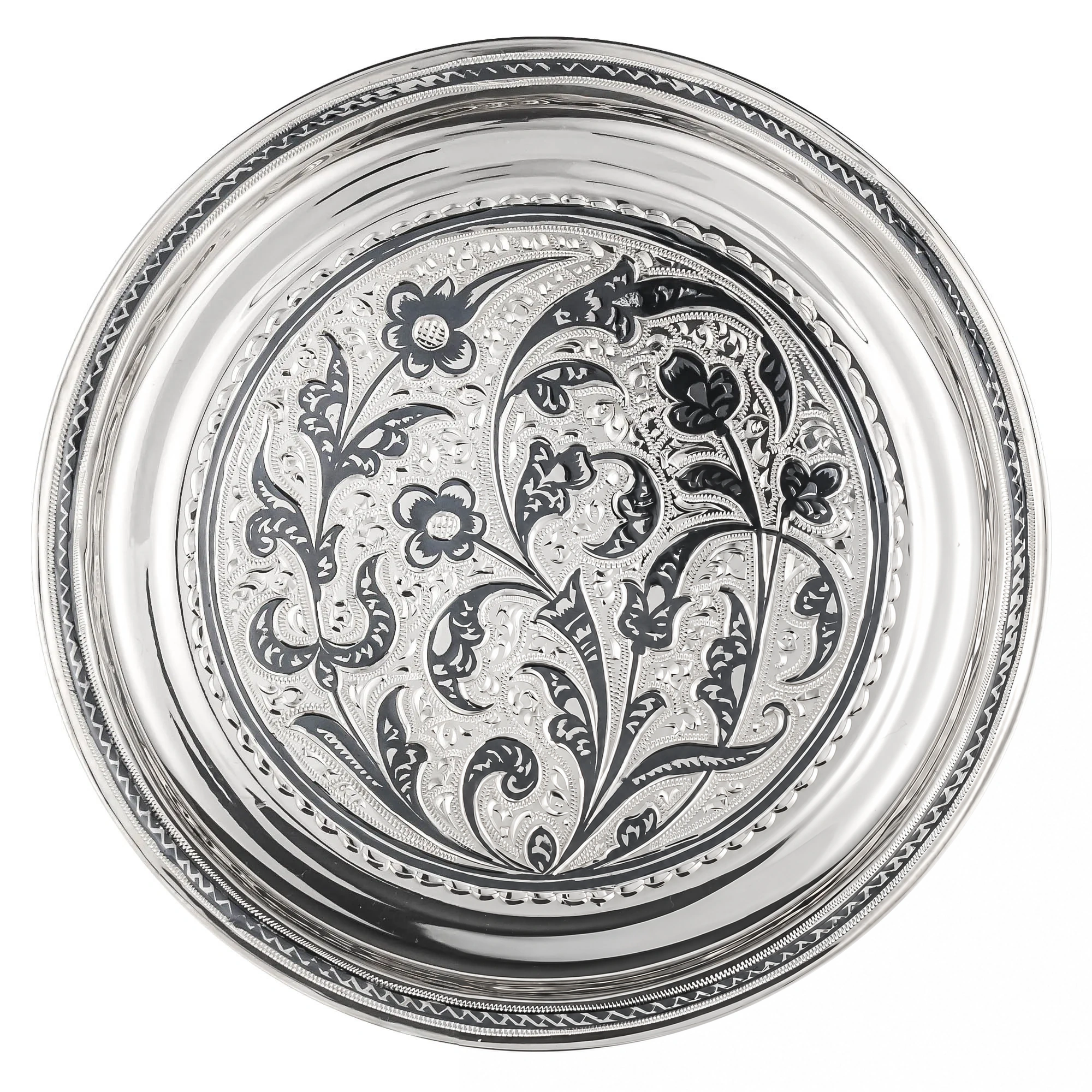 Silver dish
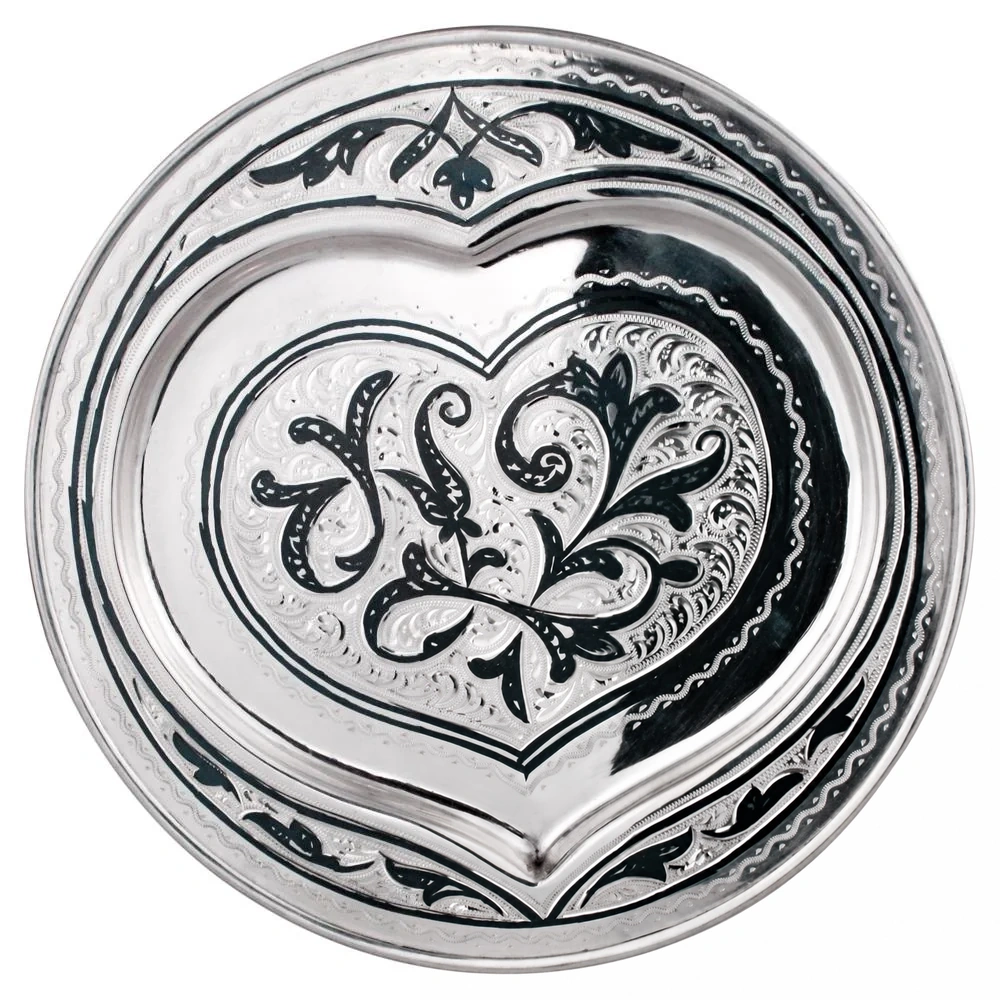 Heart-shaped silver dish
Chasing, relief and the hammer
Engraving removes metal; chasing moves it. The master works the silver from the back to push the ornament forward, then from the front with small blunt punches to sharpen the leaves and set the background back. The heavy pitcher below is a good example: its flowers and scrolls stand out in real relief, and the darkened ground behind them makes the volume read from across a room. On other pieces the hammer itself is the ornament: hundreds of small facets left on purpose, or deep flutes that run around the body like a wave.
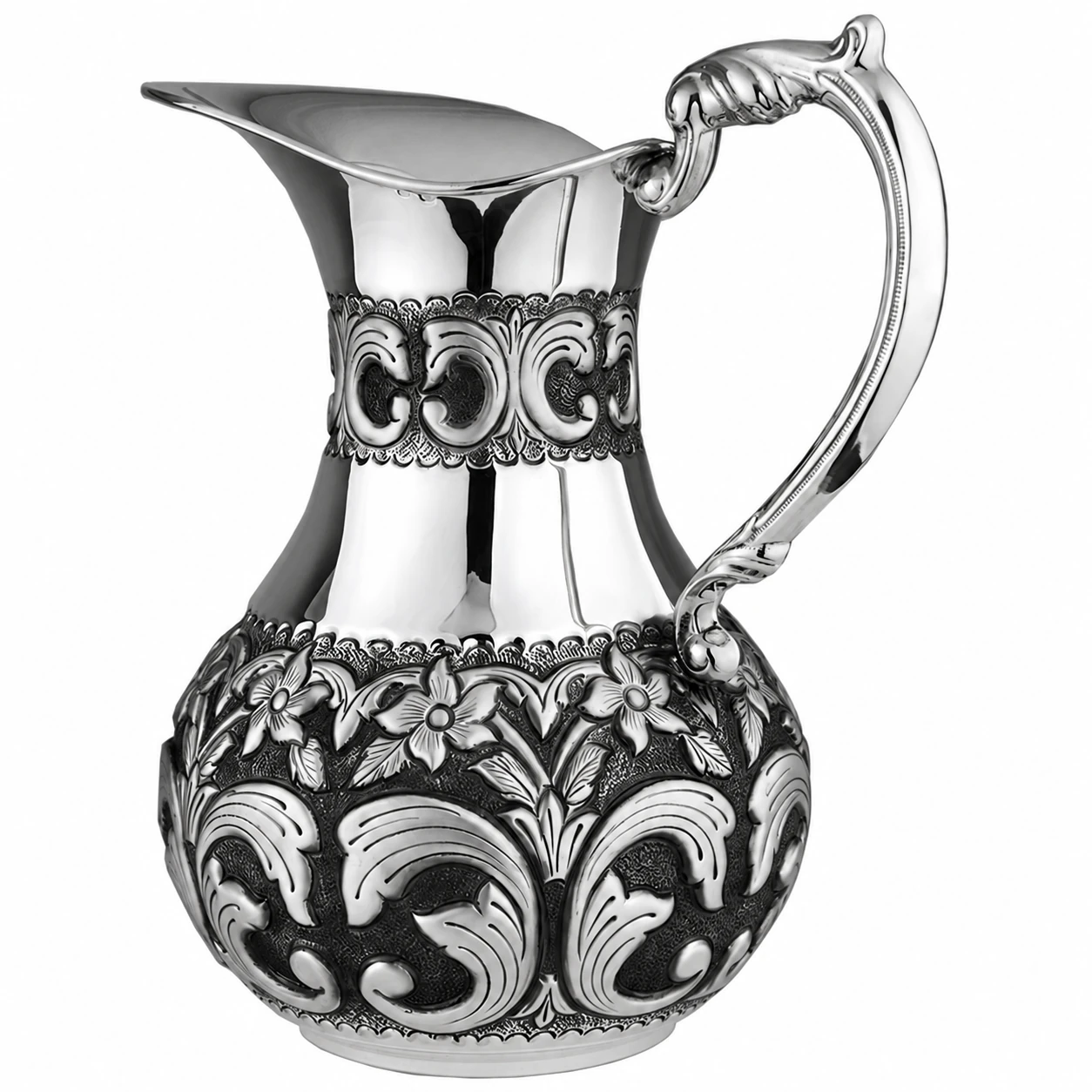 Silver pitcher · 1.2 L
 925 Silver pitcher · 570 ml
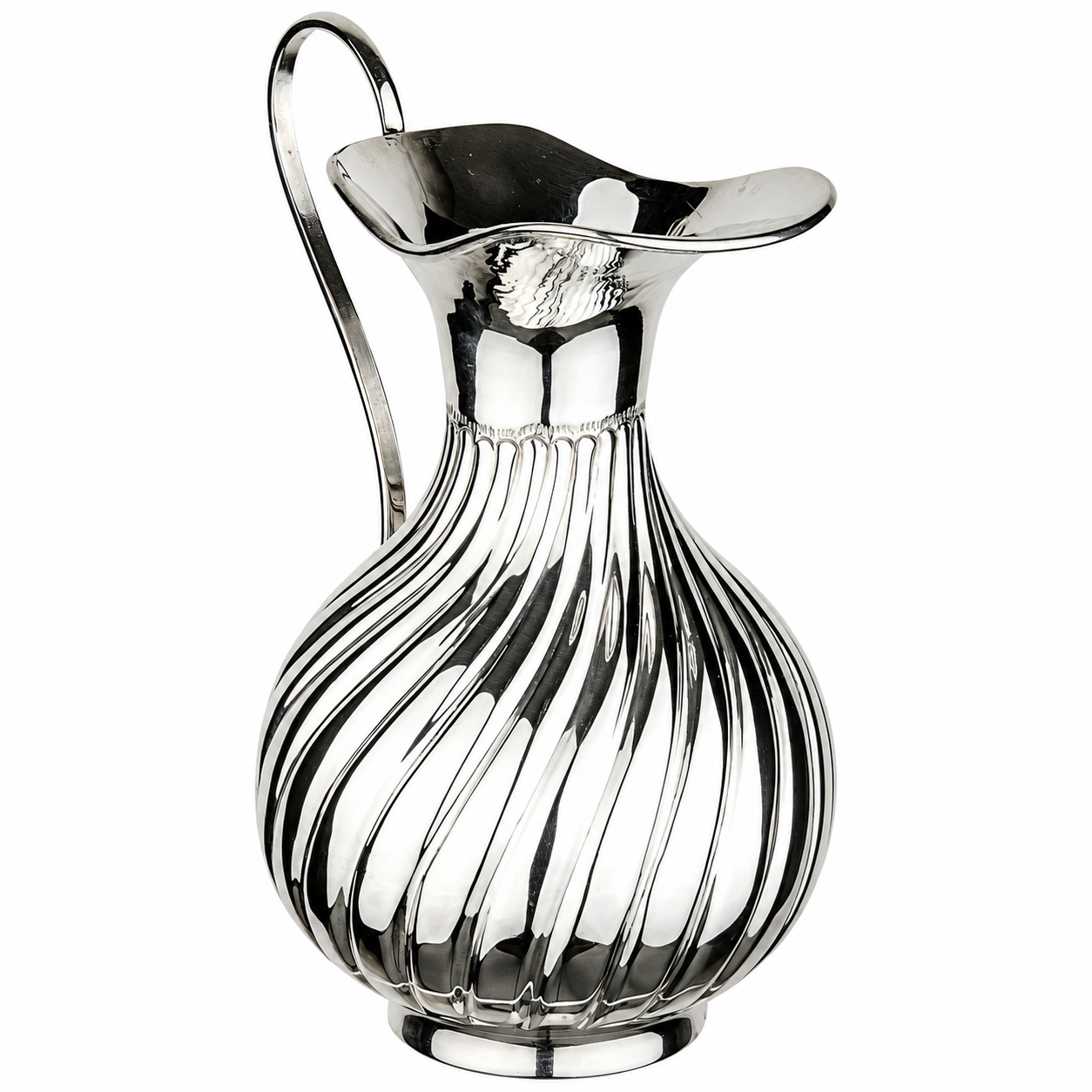 “Wave” pitcher
Inlay and mounts: silver meets another material
Some of the most striking pieces combine silver with a natural material. On drinking horns the master shapes an engraved silver mount to the irregular form of the horn, so that the two meet without a visible gap. On stone boxes silver is set into onyx. This is slow work, because neither horn nor stone forgives a mistake, and every horn is a different shape. The pleasure of these objects is the contrast: cool engraved metal against warm, polished, living material.
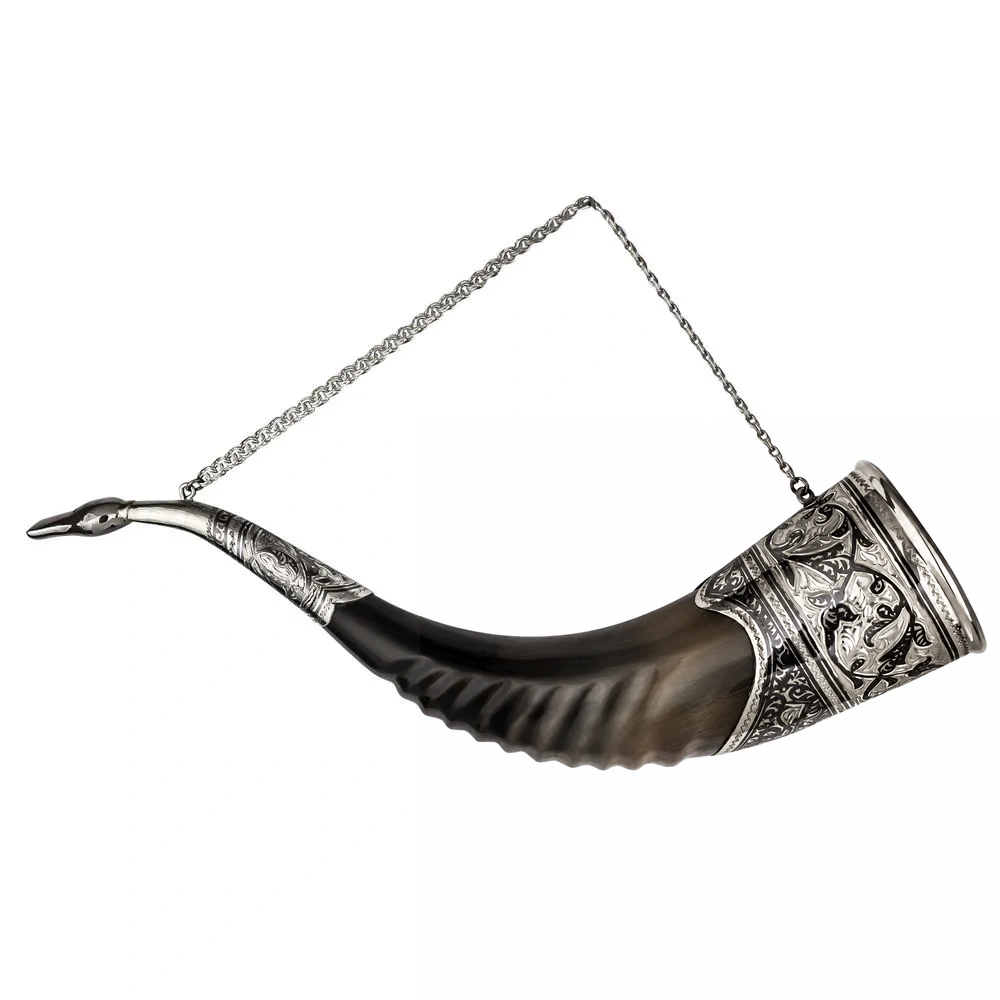 Drinking horn with silver mounts · 90 ml3,900 AED
 Horn with silver inlays · 80 ml4,800 AED
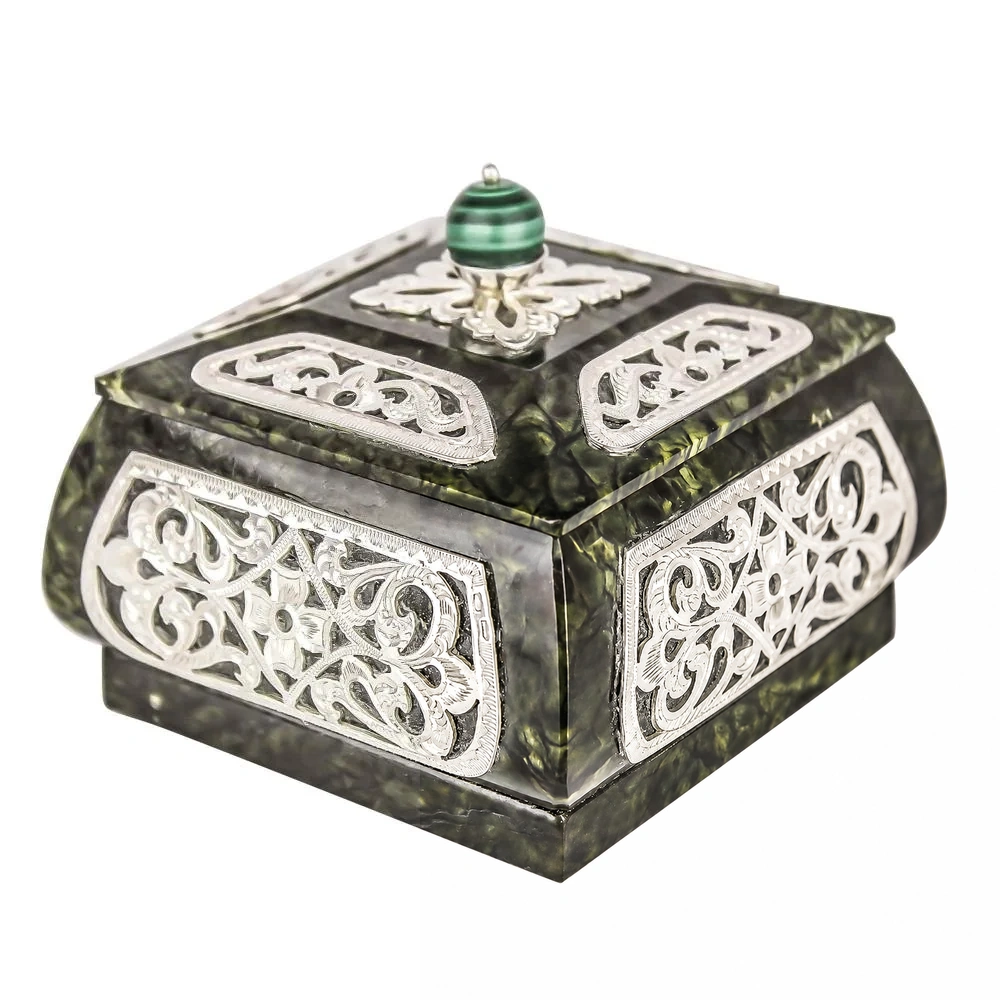 Onyx keepsake box with silver inlay8,800 AED
Gilding: the second colour
A thin layer of gold laid over part of the ornament changes the temperature of a whole piece. Used sparingly, it picks out a border or the heart of a flower. Used generously, as on a full tea service, it turns the object into a composition of three tones: gold, white silver and dark niello. Gilding is also practical. Gold does not tarnish, so the gilded parts keep their colour while the silver around them develops its own soft patina over the years.
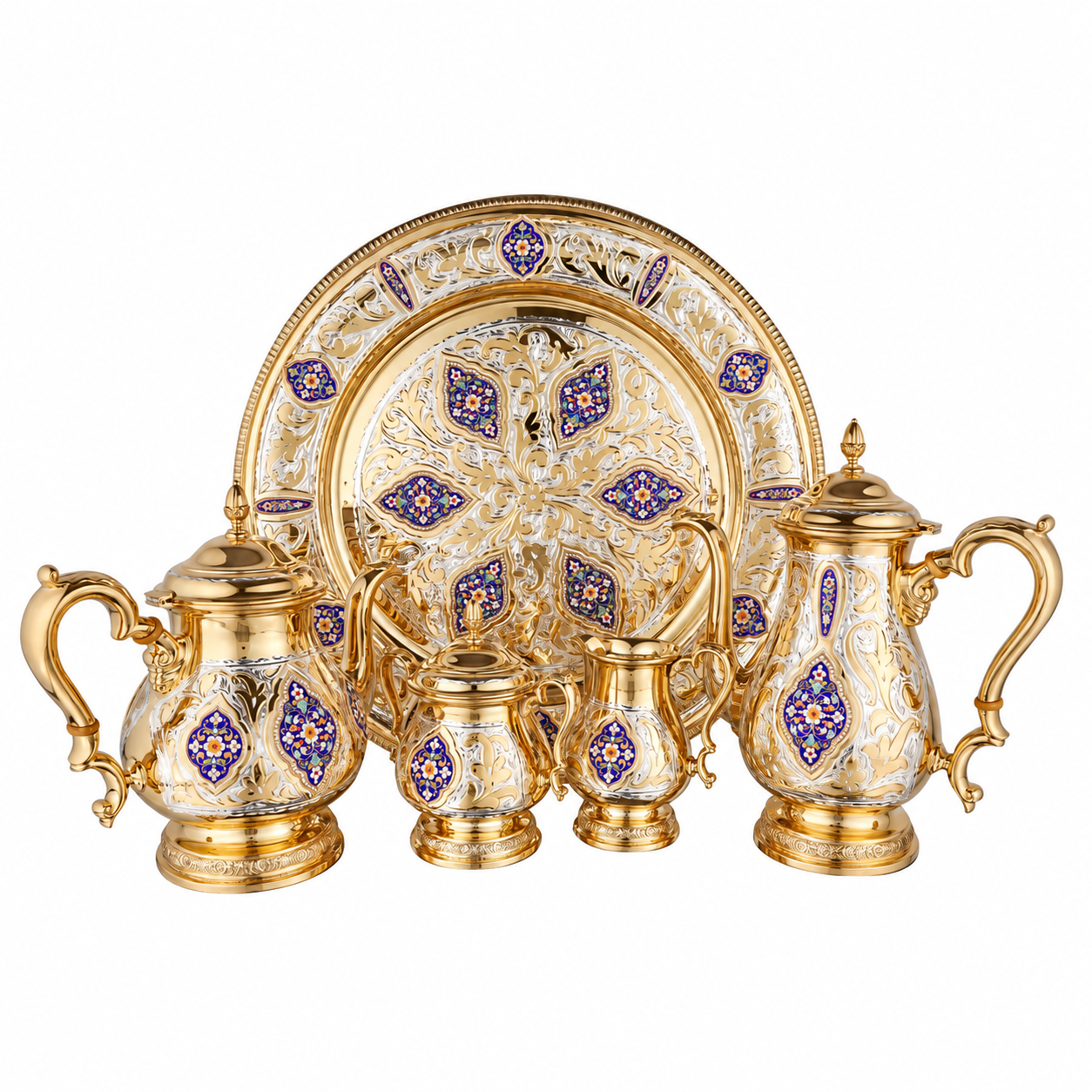 925 silver tea service
 Silver tray
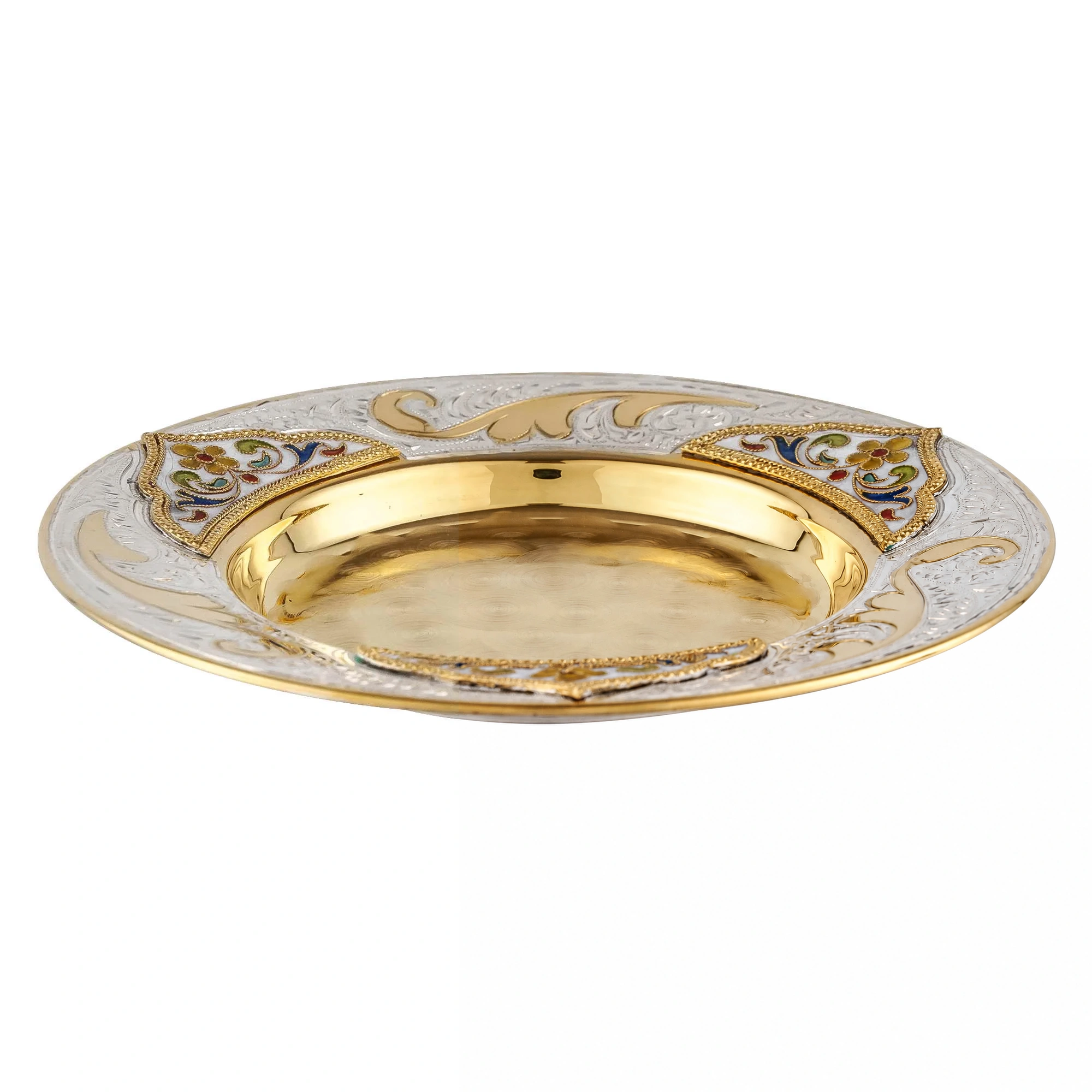 Silver saucer
Enamel: colour fired into silver
Enamel is glass, ground to a fine powder, mixed with colour and laid into the ornament by hand before firing. In the kiln it melts and fuses to the metal. Blue, violet and red sit inside the silver lines like stained glass in a window frame. Because it is glass, it does not fade: an enamelled goblet or box will keep its colour for generations if it is not dropped.
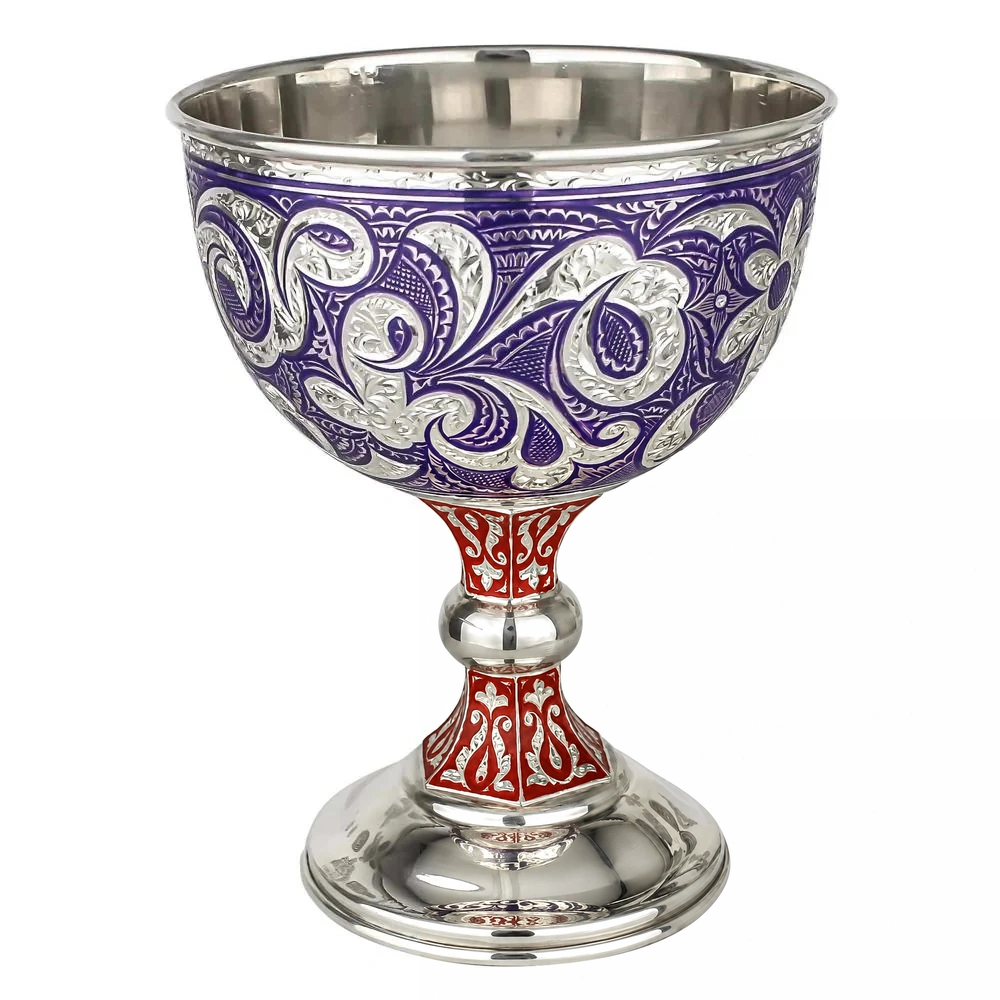 Silver goblet with blue enamel · 410 ml10,950 AED
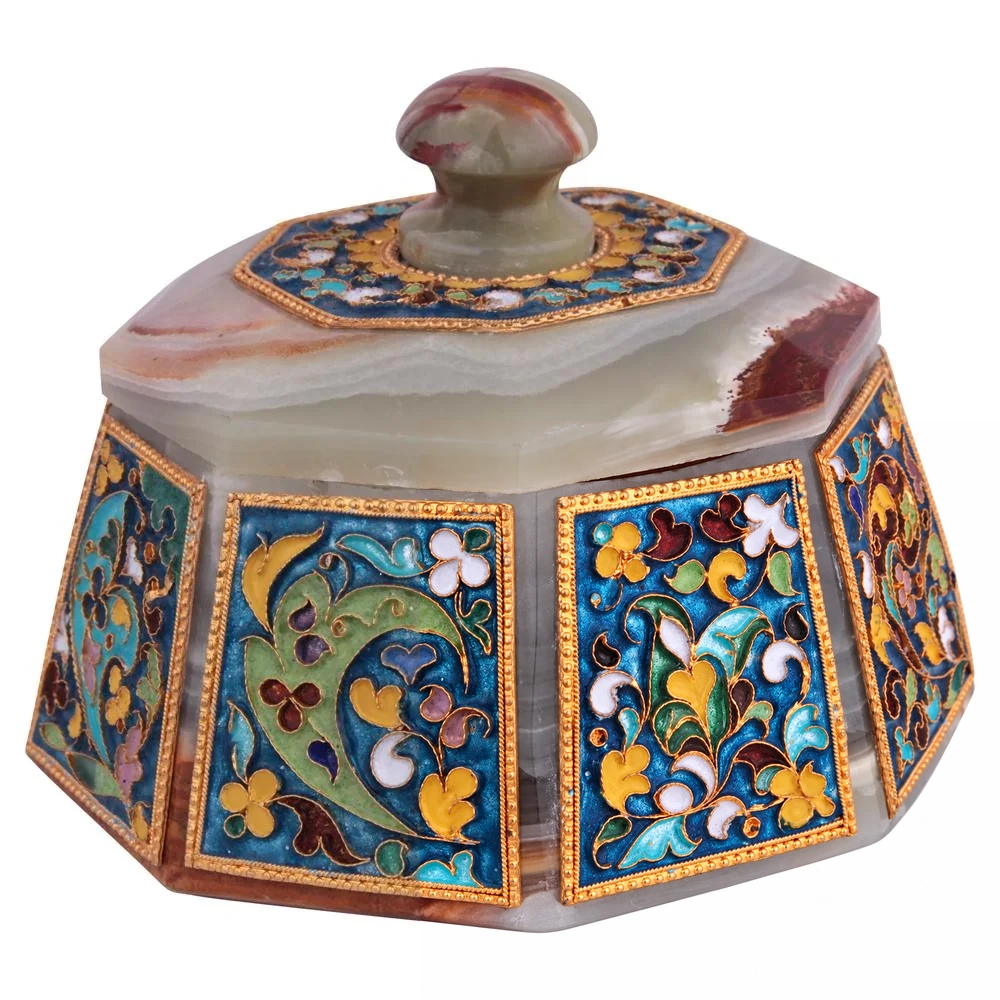 Silver keepsake box with enamel10,150 AED
 Qur’an with enamel55,950 AED
Three families of ornament
Almost every pattern in the collection belongs to one of three families. The first is the endless stem: a vine that branches, curls and never stops, with each leaf growing out of the one before it. In Arabic this is tawriq; Europe later called it the arabesque. It is about growth and continuity, which is why it suits pieces meant to be passed on.
 Silver tray
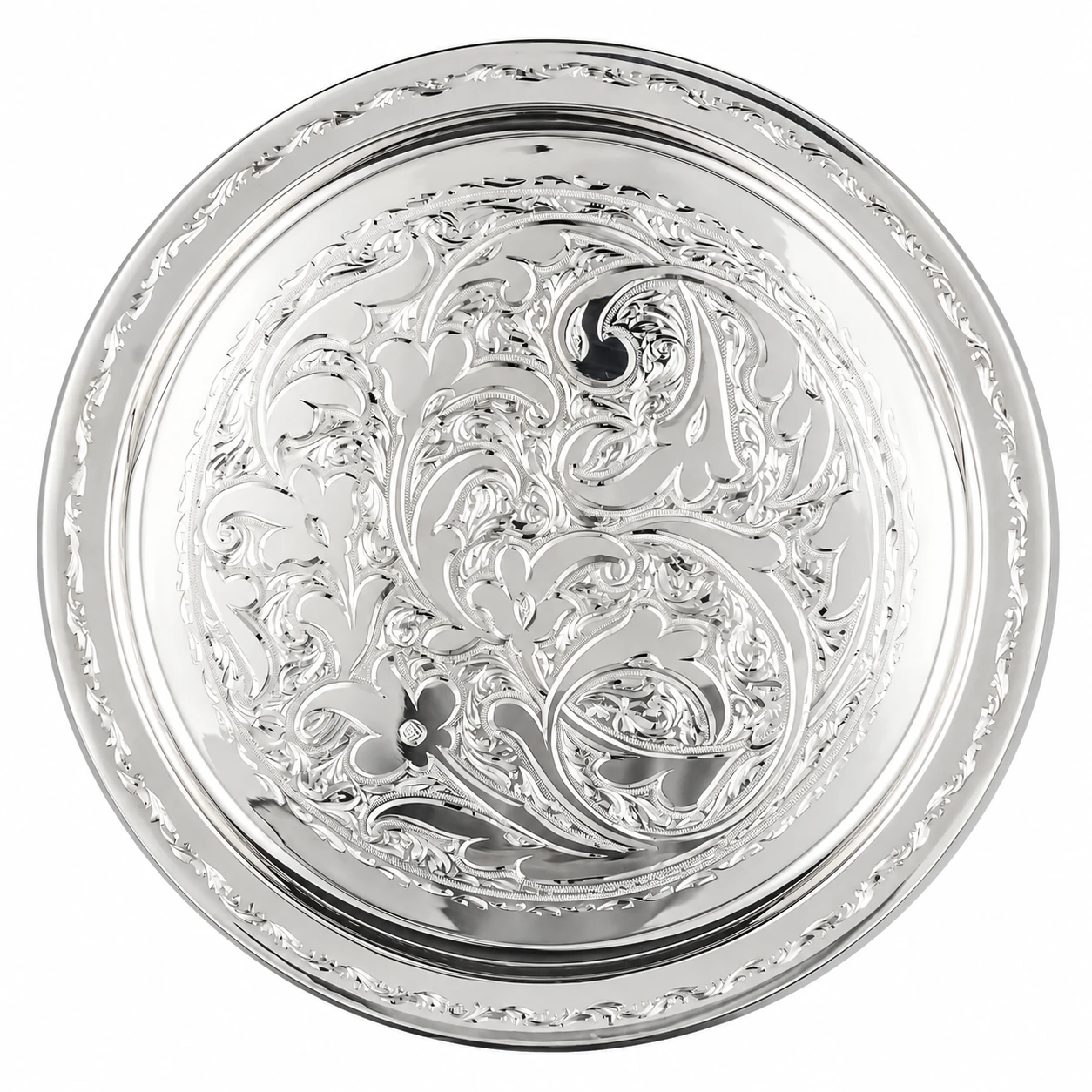 Engraved silver tray
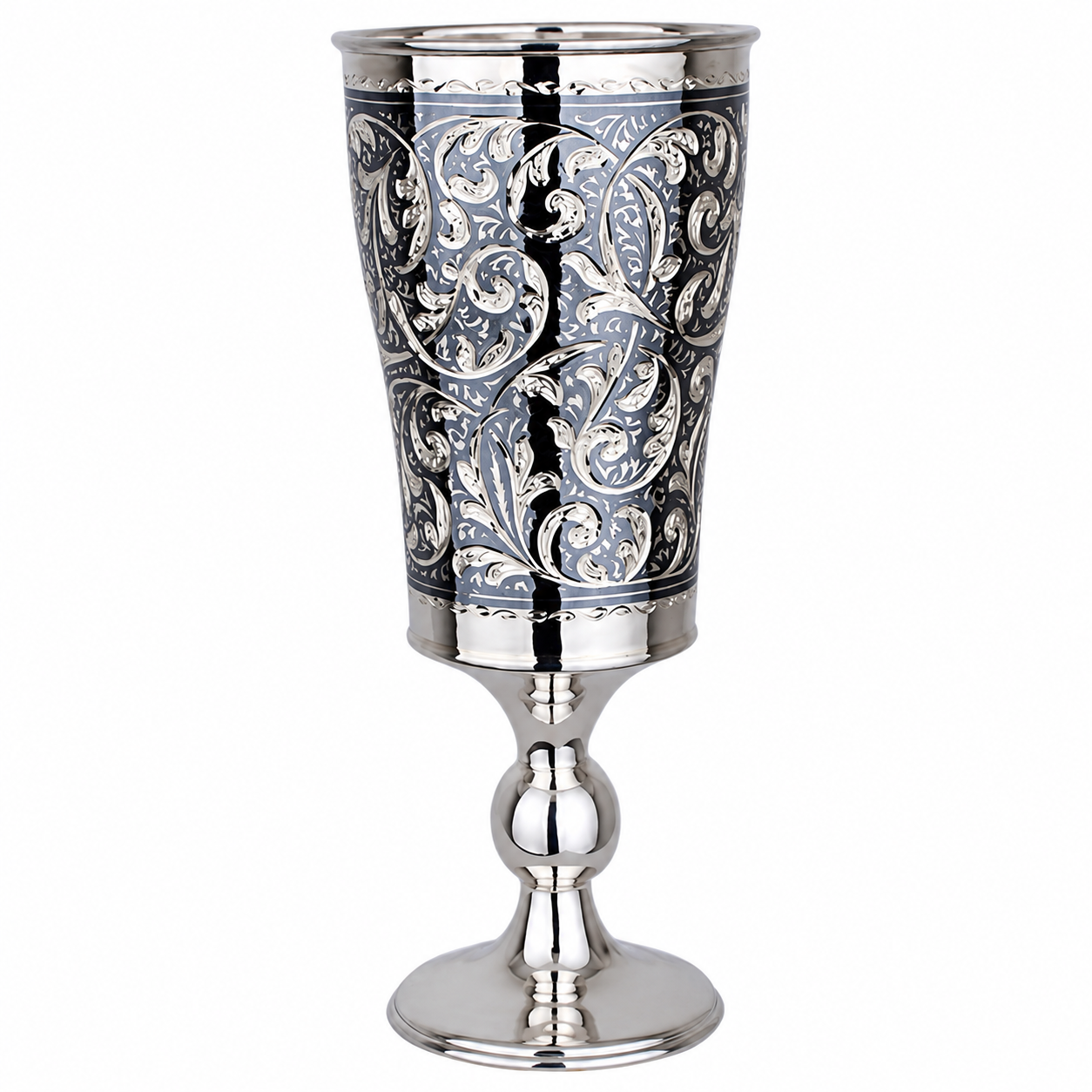 Luxury silver goblet · 280 ml
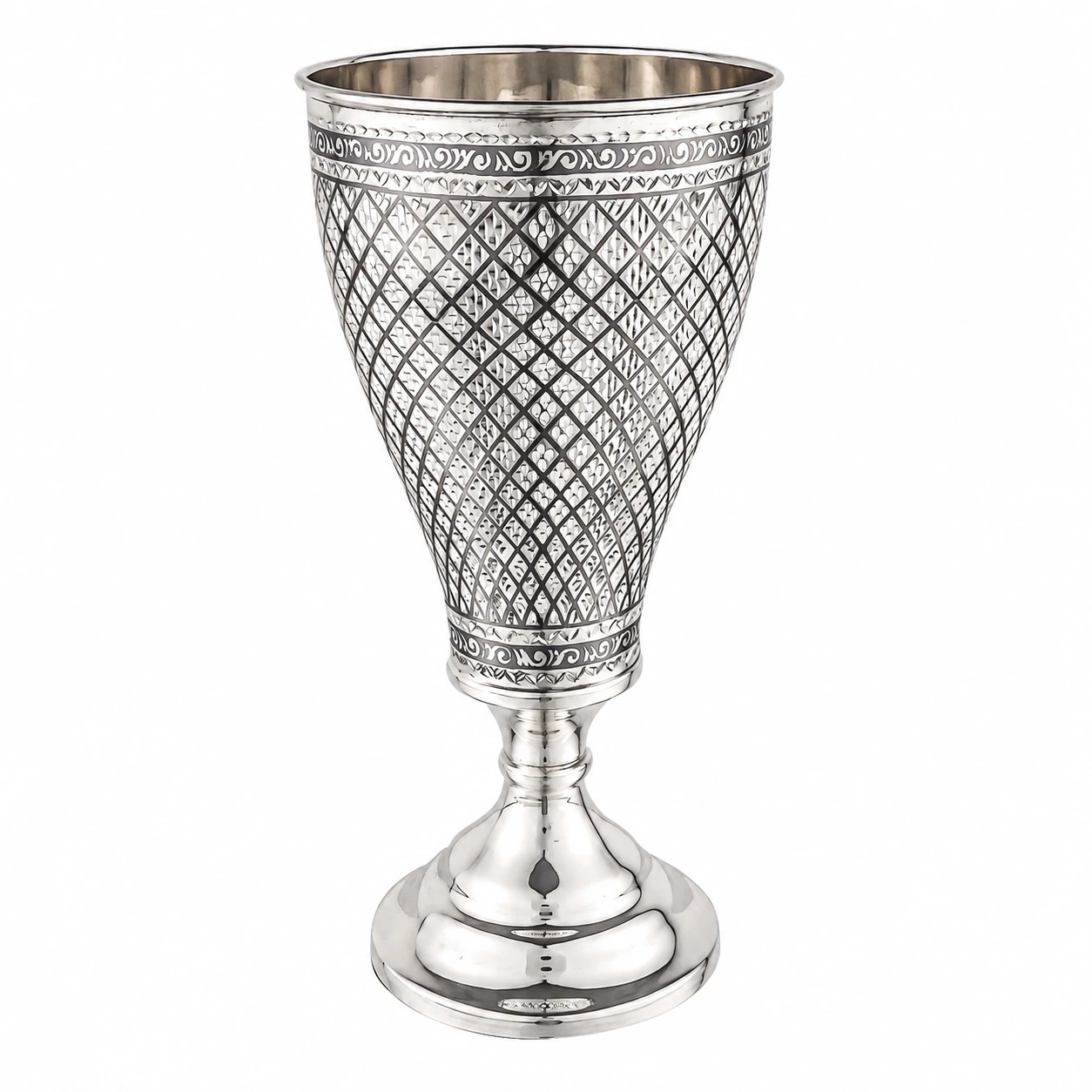
The second is geometry: nets of rhombuses, lattices and stars, laid out with compass and ruler and then cut by hand. On a flat tray a lattice looks calm; on the curved body of a pitcher or goblet every facet catches light at a different angle and the surface starts to shimmer.
 Silver goblet · 500 ml
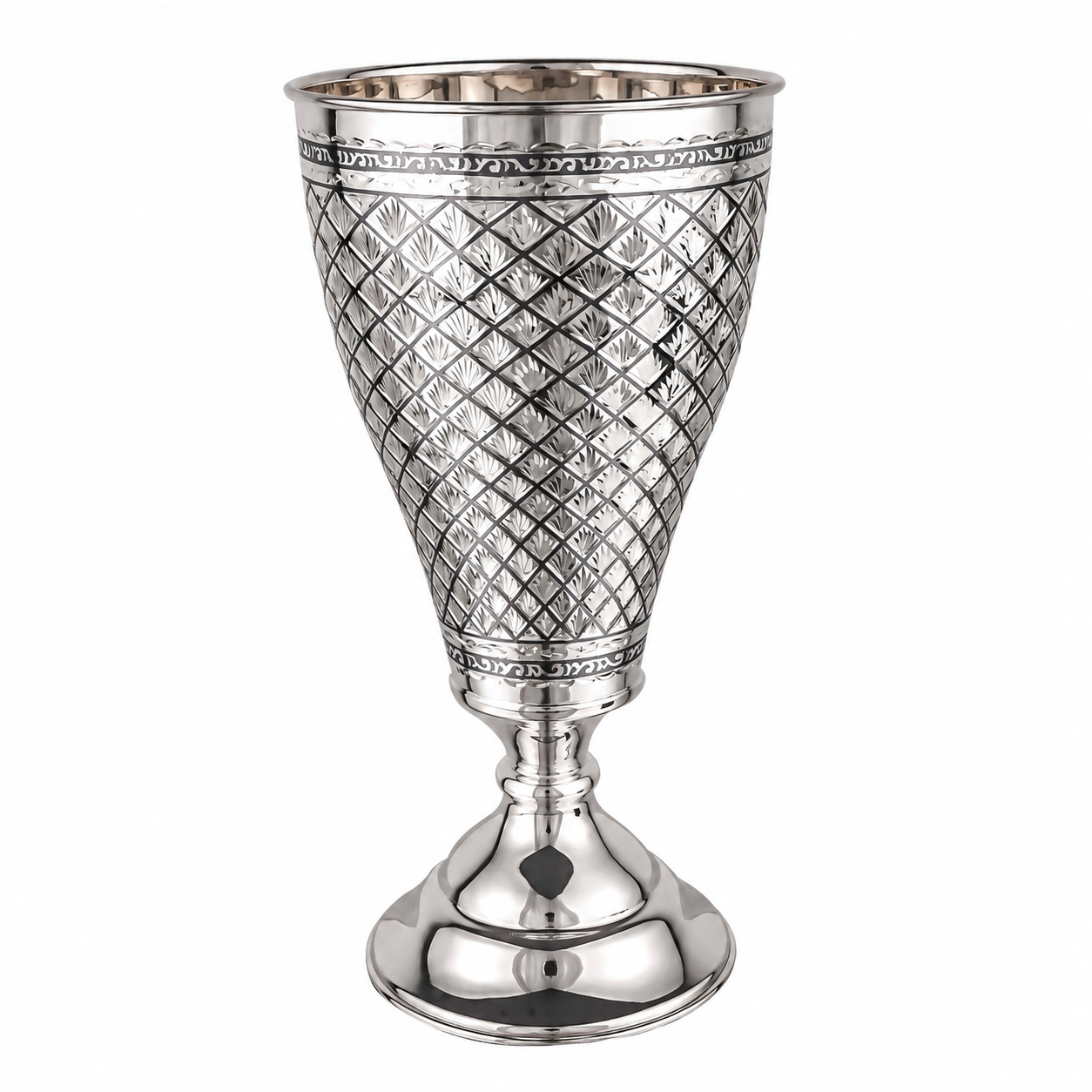 Silver goblet · 500 ml
 Engraved silver tray
The third is the rosette, a flower seen from above, opening from one centre. It is the natural heart of a round tray or dish, the point the eye keeps returning to, and often the place where the master shows the finest work.
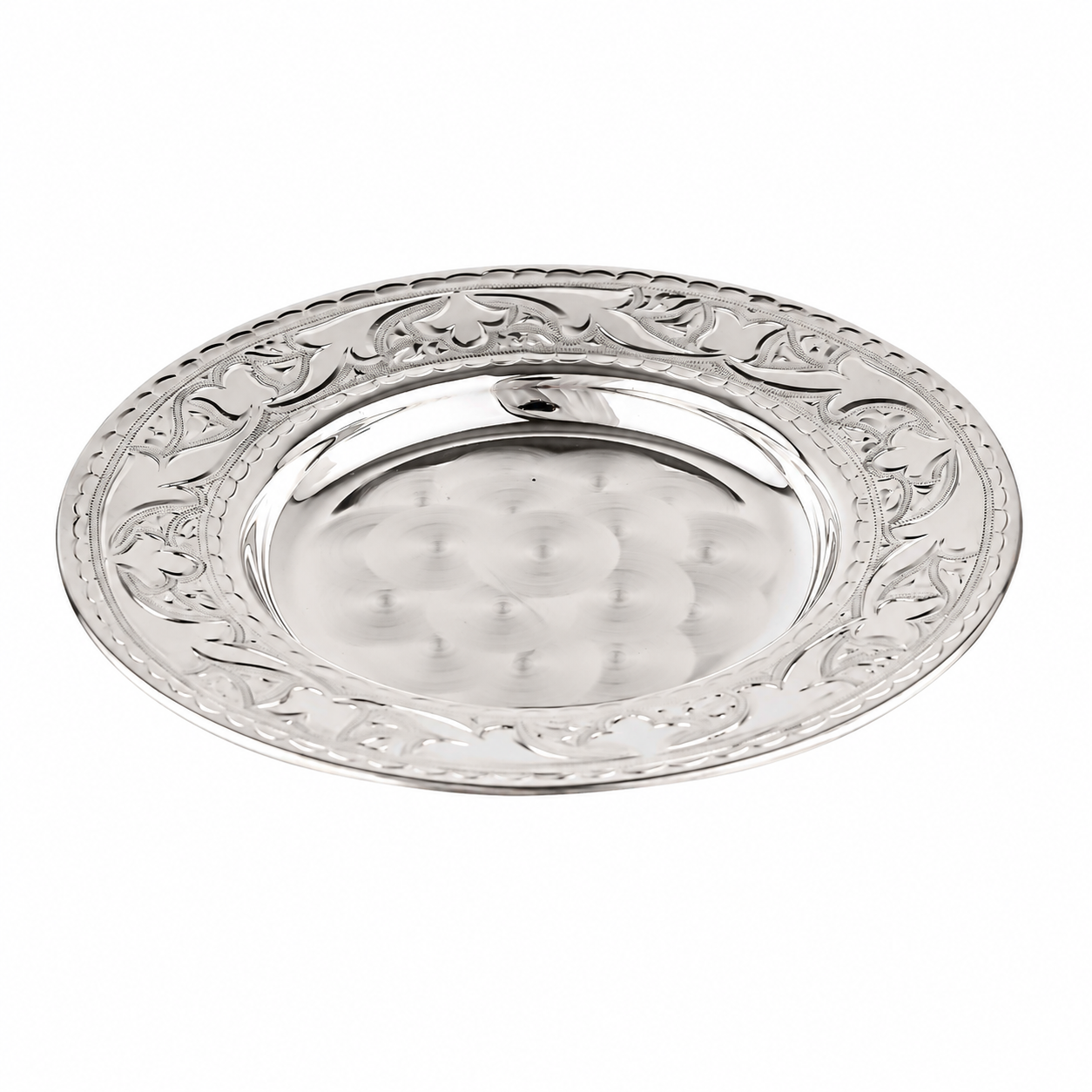 Silver saucer
 Silver saucer
How to look at a piece
Start from a distance and look at the composition: does the ornament fill the form evenly, does it follow the curves, is there a clear centre? Then come close. Follow one line from start to end: in good engraving it runs without hesitation and ends cleanly. Check that the niello is level and black, with no grey patches. Turn the piece over: careful work is finished on the underside too. Finally, take it in your hand. Hand-worked silver has weight, and every piece in our catalogue lists both its fineness, 875 or 925, and its weight in grams.
None of this needs a specialist. It needs a few minutes and a little attention, which is exactly what these objects were made to reward.
Explore the collection